
Black lung and the dust rule on hold
1The short version
Every other edition of this briefing has treated coal as an economy: jobs, severance taxes, road money, bankruptcies. This one is about what coal does to the people who still dig it, and why a federal rule meant to protect them is sitting in limbo while the disease climbs to levels not seen since the 1970s.
Got the gist? Keep going for the full story, or share this with someone who should know.
2The full story
32.5%Veteran miners with black lungUnderground miners in KY, VA and WV with 25+ years, NIOSH X-rays over the last five years
3.9%Same group elsewhere in the U.S.Roughly a tenth of the central Appalachian rate
50 µg/m³Silica limit in the 2024 ruleHalf the old limit; enforcement stayed by a federal court since April 2025
$3.75BTrust fund borrowing, FY2026Estimated Treasury advances; coal-tax receipts cover about 15% of interest
The numbers got worse, not better
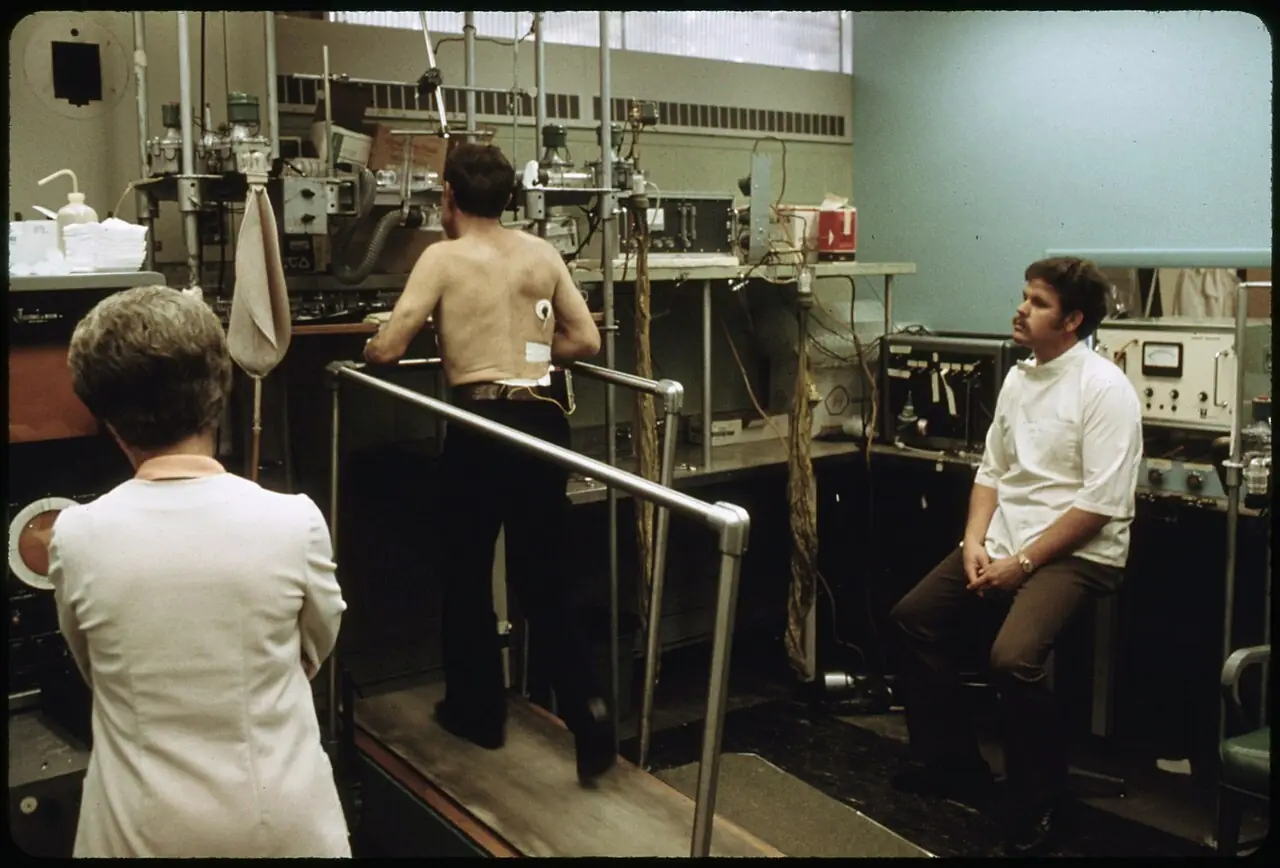
In August 2026, NIOSH researchers published a research letter in the American Journal of Respiratory and Critical Care Medicine finding that 32.5% of working underground miners in Kentucky, Virginia and West Virginia with at least 25 years underground showed coal workers' pneumoconiosis, the formal name for black lung, on NIOSH chest X-rays taken over the previous five years [171]. NPR, Kentucky Public Radio and Public Health Watch reported that the last time the rate was that high for miners with that work history was 1978, that it was 20.6% when NIOSH last reported it in 2018, and that it's more than four times the 1999 low of 7% [172]. NIOSH told those reporters the estimate rests on 280 veteran central Appalachian miners screened in five years, 91 of whom tested positive [172]. The 2018 NIOSH update had already put the most severe form, progressive massive fibrosis, at about 5% of long-tenure miners in the region [173], and a separate study of benefits claimants found Virginia had the sharpest rise in that severe form [174].
The culprit researchers keep pointing to is quartz. As the thick seams were mined out, more of the mining in central Appalachia cuts through thin seams and the rock around them, and rock dust carries crystalline silica, which scars lungs faster than coal dust alone. NIOSH's lead author told NPR, "This is not going to get better because of all the disease that's already in the pipeline" [172].

The rule that was supposed to help
In April 2024 the federal Mine Safety and Health Administration (MSHA) finalized a rule cutting the permissible exposure limit for respirable crystalline silica in half, to 50 micrograms per cubic meter averaged over an eight-hour shift, with an action level of 25 that triggers more sampling. It took effect June 17, 2024, with coal mines given 12 months to comply and other mines 24 [166]. It never really arrived in coal. MSHA first paused enforcement on its own for four months, to Aug. 18, 2025 [166], and on April 11, 2025, the Eighth Circuit Court of Appeals stayed the compliance deadlines in a challenge led by mining industry groups. MSHA's April 2026 program bulletin says it is enforcing only the old standards while the stay is in place [167], and the agency also delayed the effective date of the rule's conforming amendments that month [184].
The court case itself is paused, not decided. The parties put it in abeyance while MSHA does what it calls limited rulemaking to reconsider parts of the rule, filing status reports every 60 days [168]. The federal regulatory agenda describes that revised proposal as clarifying exposure monitoring, compliance methods, respiratory protection and medical surveillance "without reducing protections," and says it responds to the National Stone, Sand & Gravel Association and National Mining Association arguing the sampling and medical-surveillance requirements are too burdensome. It listed the proposal for July 2026 [169]. A search of the Federal Register this morning showed no proposal published yet [184]. Safety+Health magazine reported that the White House finished reviewing the draft Aug. 10 [170].
The United Mine Workers have pushed back hard. In August UMWA President Brian Sanson demanded the 2024 rule be enforced immediately, citing the NIOSH numbers, and said, "A company's profit margin cannot take precedence over a miner's right to draw a breath." The union opposes letting respirators substitute for engineering controls like ventilation and water sprays, and wants more unannounced dust sampling [170].
What's on the ground in Buchanan
The county has unusually direct access to black lung care. Stone Mountain Health Services runs Virginia's only federally funded Black Lung Clinic program, with its Vansant Respiratory Care Center in Buchanan and a second site at St. Charles in Lee County [175]. It's one of 15 such programs funded by the federal Health Resources and Services Administration. In the year ending June 2019, it served 2,450 miners from eight states, filed 471 new benefits claims, handled 116 hearings, won 314 awards, and reported what it called the largest cluster of progressive massive fibrosis ever documented [176]. Its current federal award totals $1,203,277 for fiscal 2026, with the project period running to June 30, 2030 [177].
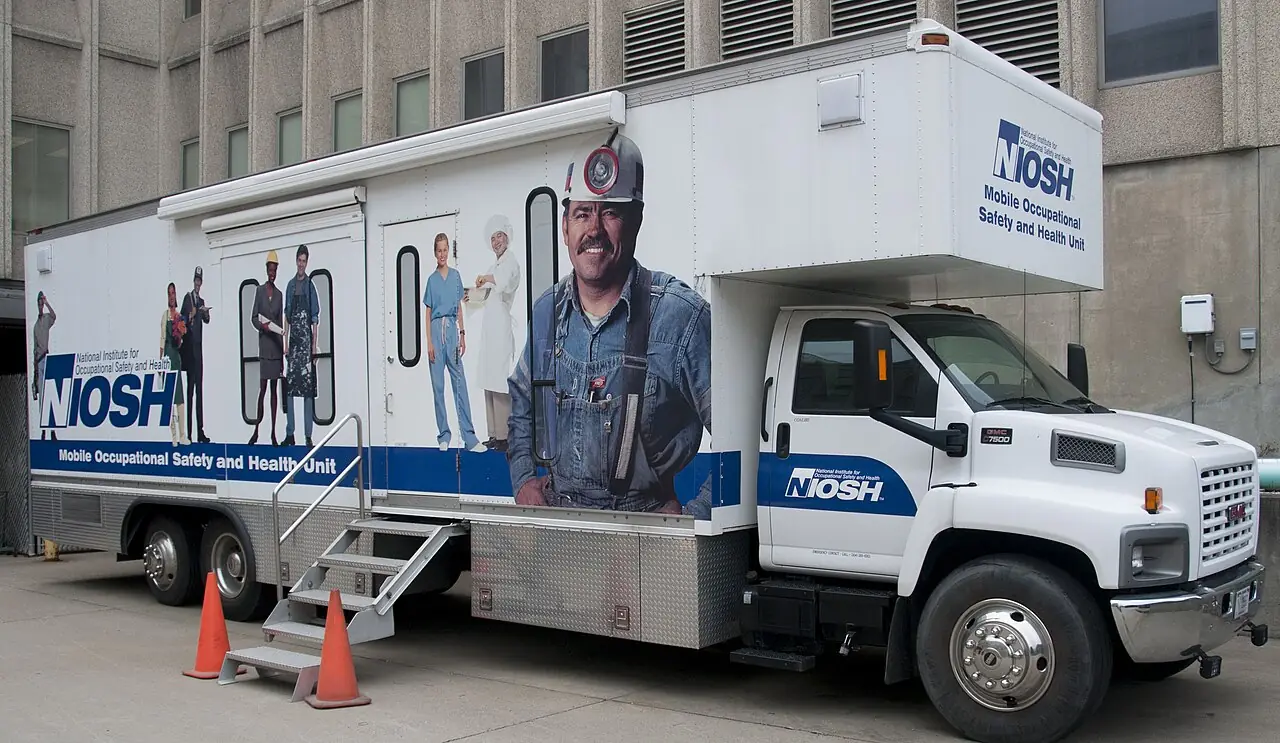
NIOSH's free mobile screening van stopped at Stone Mountain in Vansant on April 7, 2026, part of the program's 21st year of visits, as Rep. Morgan Griffith's office announced [178]. Miners can get a confidential screening about every five years, employers never see the results, and a miner whose X-ray shows black lung gains the right under federal Part 90 rules to transfer to a lower-dust job without a pay cut [179]. That program nearly lost its staff: the 2025 federal layoffs hit NIOSH's Respiratory Health Division in Morgantown, a federal judge ordered the jobs restored in May 2025 after a suit by coal miners [180], and by January 2026 the union said everyone who got a layoff notice had been reinstated [181].

Who pays when the company is gone
When no responsible coal company is left to pay a miner's benefits, the federal Black Lung Disability Trust Fund does. Its main income is an excise tax of $1.10 a ton on underground coal and 55 cents on surface coal, capped at 4.4% of the sale price, which the Inflation Reduction Act made permanent in 2022. The Labor Department's fiscal 2026 budget justification says the fund "has run at a deficit virtually since its inception," projects about $3.75 billion in short-term Treasury advances, and expects coal-tax receipts to cover benefits and administration but only about 15% of interest and bond payments. It expects to pay about 8,745 beneficiaries directly and to receive about 6,250 new claims in fiscal 2026 [182]. Bankruptcies make it worse: the Government Accountability Office found that three self-insured coal companies that went bankrupt between 2014 and 2016, Alpha Natural Resources, James River Coal and Patriot Coal, shifted an estimated $865 million in benefit liability onto the fund [183].
Buchanan's roughly 1,000 remaining mining jobs (the March 2026 count in the ninth edition) are exactly the workforce in that 32.5% figure: long-tenure underground miners in central Appalachia. For now they're working under the pre-2024 silica limit, and the question for 2027 is whether MSHA's revised proposal keeps the 50 limit and the sampling that makes it real, or keeps the number and loosens the monitoring. The regulatory agenda promises no reduced protections, but the stated purpose is to answer industry's complaints about sampling and medical surveillance, so the details will matter more than the headline limit.
The money side follows the same pattern as the county's road fund from earlier editions: benefits for disease that shows up decades later are financed by a per-ton tax on coal mined today. As tonnage falls and operators go bankrupt, the people still owed benefits end up depending on federal borrowing. Layoffs also matter medically. A miner pushed out of work loses the Part 90 right to a lower-dust job, which only helps while you're still employed, so screening before a layoff is worth more than screening after.
The 2024 silica rule is still on the books. It wasn't repealed; its compliance deadlines are stayed by a court and MSHA is rewriting parts of it. Also, the 32.5% figure covers working underground miners with 25+ years, not all miners, and NIOSH's estimate rests on a sample of 280 screened miners.
3Dig deeper: every source
Every bracketed number above links to its source. Here they all are in one place. If one doesn't say what we said, tell us.
- doi.org/10.1093/ajrccm/aamag401
- www.npr.org/2026/08/05/nx-s1-5894884/appalachia-black-lung-coal-miners-silica-dust
- archive.cdc.gov/www_cdc_gov/niosh/updates/upd-07-20-18.html
- pmc.ncbi.nlm.nih.gov/articles/PMC6528482/
- commons.wikimedia.org/wiki/File:MINER_IN_THE_BLACK_LUNG_LABORATORY_AT_THE_APPALACHIAN_REGI
- www.msha.gov/regulations/rulemaking/silica
- www.msha.gov/compliance-and-enforcement/compliance-assistance/program-information-bulletin
- www.federalregister.gov/documents/2026/04/06/2026-06584/lowering-miners-exposure-to-respir
- wvpublic.org/wp-content/uploads/2026/04/040626-Sorptive-Minerals-Institute-v.-MSHA-Status-
- www.reginfo.gov/public/do/eAgendaViewRule?pubId=202510&RIN=1219-AC22
- www.safetyandhealthmagazine.com/miners-union-demands-reinstatement-of-msha-silica-rule/
- stonemountainhealthservices.org/black-lung-respiratory-services.html
- appvoices.org/wp-content/uploads/2020/06/BLCP-HRSA-2020-Press-Release.pdf
- taggs.hhs.gov/Detail/AwardDetail?arg_AwardNum=H3700048&arg_ProgOfficeCode=236
- morgangriffith.house.gov/news/documentsingle.aspx?DocumentID=405660
- www.cdc.gov/niosh/cwhsp/screenings/index.html
- www.wdtv.com/2025/05/14/update-federal-judge-orders-restoration-jobs-niosh-response-coal-m
- wchstv.com/news/local/all-niosh-employees-who-received-layoff-notices-in-2025-have-been-re
- commons.wikimedia.org/wiki/File:NIOSH_Mobile_Health_Screenings_(16027817612).jpg
- www.dol.gov/sites/dolgov/files/general/budget/2026/CBJ-2026-V2-08.pdf
- www.gao.gov/products/gao-20-438t
Was this useful?
Send feedback. One question, no name needed. Report a correction.