
Who inspects the mines, and the rules being rewritten
1The short version
The eleventh edition covered the slow danger underground, dust. This one covers the fast ones, roof falls and methane, and the two layers of inspectors who are supposed to catch them. Both layers are changing: the federal one has lost staff and is proposing to give its district managers less say over individual mines, while the state one is small and stretched across seven counties.
Got the gist? Keep going for the full story, or share this with someone who should know.
2The full story
166Virginia mining deaths since 1983MSHA records, compiled by miningincidents.org; one in 2024, one in 2025
711Workers at Buchanan Mine #1620 underground, in 2024; Virginia's largest underground mine
18State coal mine inspectorsPlus two supervisors, split between Lebanon and Big Stone Gap
Every 180 daysRequired state inspectionsEach underground coal mine, under Virginia Code § 45.2-559
The last coal death here
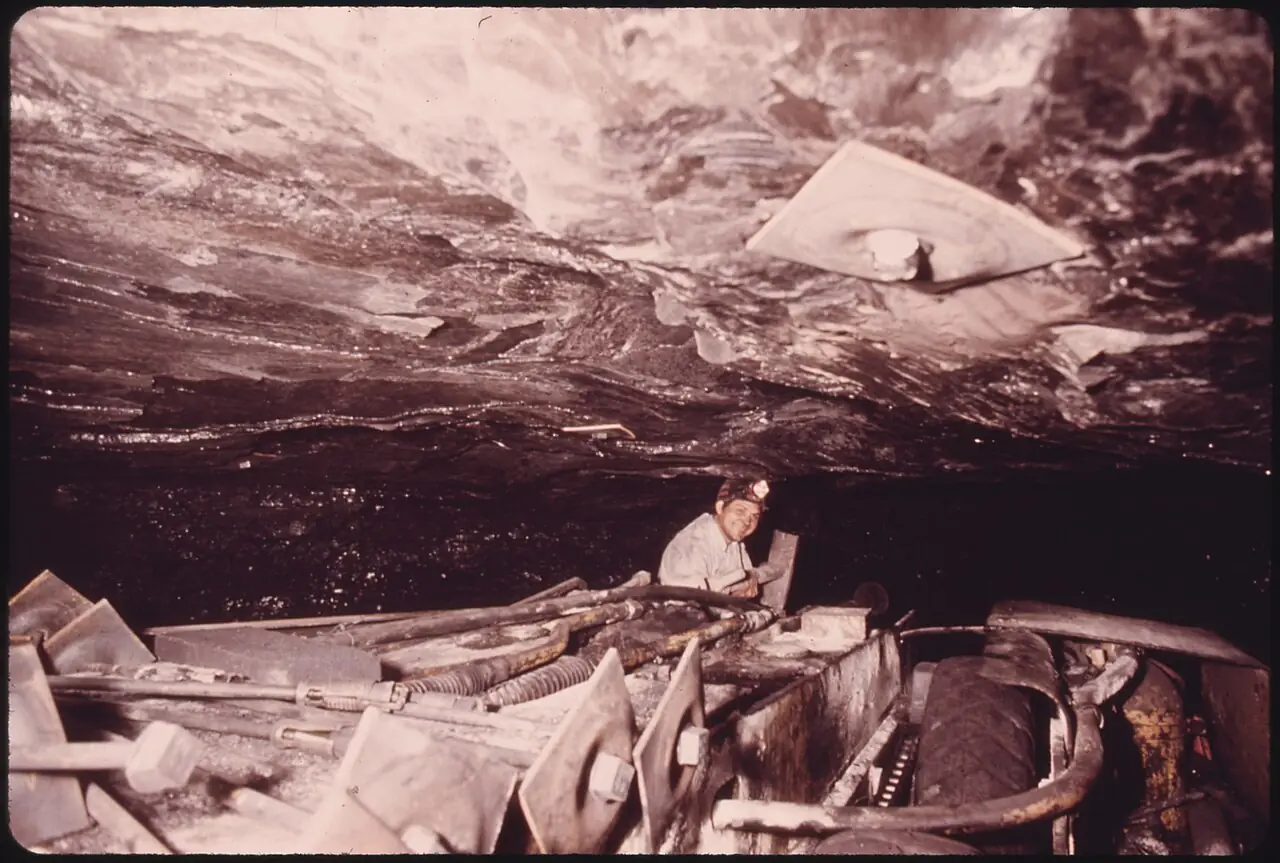
On May 31, 2024, Brock Anthony Jackson, a 27-year-old roof bolter, was killed at Buchanan Mine #1, operated by Buchanan Minerals LLC, part of Coronado, near Oakwood. A piece of roof rock about 6 feet by 4 feet and 14 inches thick, weighing an estimated 3,500 to 4,000 pounds, fell on him after he walked about 17 feet under unsupported roof to get bolting supplies, according to Virginia Energy's investigation [185]. MSHA's preliminary report measured the rock at 9 by 4 feet [187]. Virginia Energy says he had 14 months at the mine and seven as a bolter [185]; MSHA's final report credits him with more than three years of mining experience and gives the root cause as the operator failing to make sure miners worked and traveled only under supported roof [186].
The scale of that one mine is the context. In 2024 it employed 711 people, 620 underground, running 12 mechanized mining units including a longwall on three production shifts seven days a week, and it has been mined since 1983. Virginia Energy said the previous coal-mining death in Virginia was in March 2015, and that the state had more than 2,000 coal miners in 2023 [185][188]. Statewide, MSHA records show 166 mining deaths since 1983; the one Virginia death in 2025 was at a stone operation, not a coal mine, and none has been reported in 2026 so far [189].
Injuries don't stop when deaths do. MshaScan, a third-party tracker built on MSHA's public accident filings, lists 724 accidents and 8 deaths at Buchanan Mine #1 since 1983. Its 2026 entries include at least nine filings for dust disease of the lungs between May and September, one for a worker hired in mid-April and diagnosed a week later, which points to exposure at earlier jobs, and a Sept. 1 rib-bolting injury that left a permanent disability [190].

A gassy mine with a fire in its past
Buchanan Mine #1 works the Pocahontas No. 3 seam, which gives off a lot of methane. EPA's 2008 profile of gassy U.S. mines put its methane release at about 7.8 million cubic feet a day [192]. On Feb. 14, 2005, when it was run by Consolidation Coal, a roof fall behind the longwall registered as a magnitude 3.0 seismic event on Virginia Tech's seismograph. The rush of air pushed methane onto the longwall face, it ignited at the shearer, and the flame traveled around the mined-out area and set off a larger second ignition that damaged ventilation controls and started fires in coal, timbers and wood supports. Everyone underground got out. The state's report says the heat source could have been the cutter bits striking rock or friction from the face conveyor [191]. That history is why ventilation plans matter at this mine as much as roof plans do.
Two sets of inspectors
State. Virginia Energy must fully inspect every underground coal mine at least once every 180 days and every surface mine once a year, with extra inspections based on risk [193]. The law tells it to schedule them apart from federal inspections and at varied hours, including nights and weekends, and bars inspectors from ties to coal companies or unions or from inspecting a mine they worked at in the past two years [194][196]. It does this with 18 coal mine inspectors and two supervisors, nine and one in Lebanon and nine and one in Big Stone Gap, covering Buchanan, Dickenson, Lee, Montgomery, Russell, Scott and Wise counties [195].
Federal. MSHA covers Virginia from its Norton District, with a field office in Vansant [197]. A December 2025 presentation by the district manager counted 28 underground coal mines, 56 surface coal mines and 41 coal facilities among 475 operations in the district [198]. In 2025 the Department of Government Efficiency planned to end leases on 34 MSHA offices, then dropped the plan after pushback [199], but the agency still lost people: a hiring freeze voided about 90 job offers and about 120 employees took voluntary resignation, according to the Charleston Gazette-Mail [200].
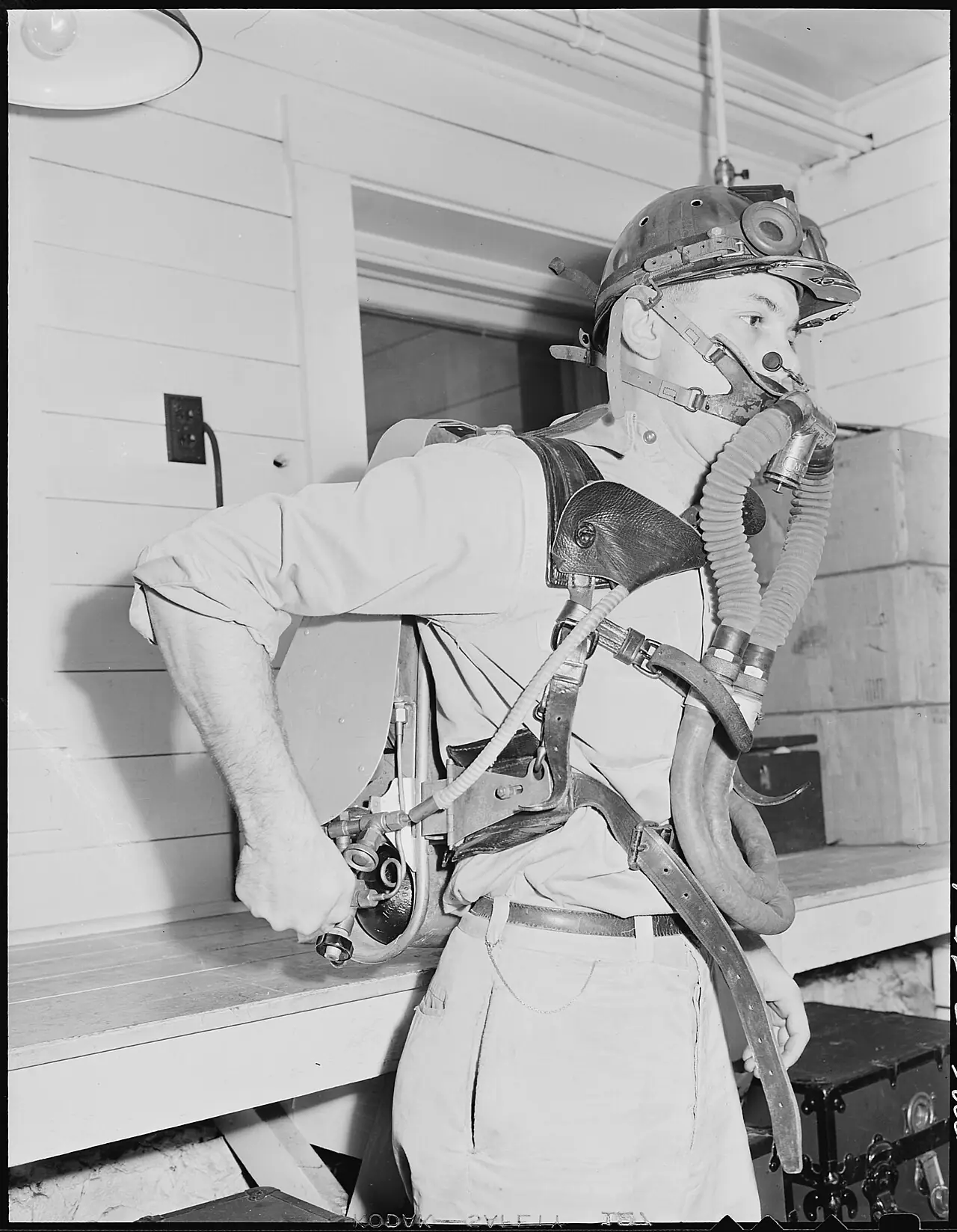
Mine rescue. When something goes wrong, the people going in are often local. At the 2026 Southwest Virginia Fallen Heroes contest in Logan, W.Va., in August, Coronado's Buchanan Red and Buchanan Black teams finished first and second in the overall coal mine rescue results, and Virginia Energy's own team placed eighth [207].

The federal rules being rewritten
On July 1, 2025, MSHA proposed a package of deregulatory rules. Two of them would remove the authority of MSHA district managers to require additional measures in a mine's roof control plan and its ventilation plan, beyond the standard criteria, and others touch training plans and pillar-mining rules. MSHA's stated reasons are legal ones, the Constitution's Appointments Clause and the Administrative Procedure Act, essentially that a district manager shouldn't be able to impose requirements that weren't set through formal rulemaking [201]. After a request for a hearing, MSHA reopened both proposals on Aug. 3, 2026, held a virtual hearing Sept. 15, and closed comments Sept. 30 [203][204][205]. Neither is final yet. A separate rule on diesel exhaust underground was finalized June 25, 2026, effective July 27, and keeps the existing 2.5-gram-per-hour engine limits [206].
The United Mine Workers oppose the roof and ventilation changes. Brian Sanson, now the union's president, said: "Everyone who has ever been underground in more than two mines knows that no mines are alike with respect to their conditions, even if they are in the same seam... Roof conditions are different, methane liberation is different" [202].
The proposals go straight at the two hazards this county's biggest mine is known for. A district manager adding mine-specific requirements to a roof plan or a ventilation plan is how federal oversight adjusts to a mine that bumps, falls and gives off millions of cubic feet of methane a day. The union's argument is that no national checklist can capture that; MSHA's argument is that unwritten add-ons aren't lawful rules. If the proposals are finalized, extra protections at a specific mine would have to come from the operator agreeing to them, from a formal national rule, or from the state.
To be fair about the 2024 death: the rule that was broken there, working only under supported roof, is a basic national standard, not a district add-on, and this proposal wouldn't change it. The honest worry is about the next unusual condition, not that one. That puts more weight on the state layer, which is 18 inspectors visiting each underground mine twice a year across seven counties, while the federal layer has fewer people than it did in 2024. Questions worth asking: will Virginia write any of the district-level roof and ventilation requirements into state law if MSHA drops them, does Virginia Energy have funding to fill its inspector slots, and how many mine-specific add-ons are in Buchanan Mine #1's current plans?
The roof and ventilation changes are proposals, not final rules, as of this morning. The diesel rule is final but didn't loosen the emission limits. The MSHA offices slated for closure in 2025 weren't closed. And the 8 deaths and 724 accidents at Buchanan Mine #1 cover more than 40 years and several owners; they come from a third-party summary of MSHA data, not an official MSHA tally.
3Dig deeper: every source
Every bracketed number above links to its source. Here they all are in one place. If one doesn't say what we said, tell us.
- energy.virginia.gov/coal/coal-mine-safety/documents/AccidentsandFatalities/Buchanan%201%20
- www.msha.gov/sites/default/files/Data_Reports/Fatals/Enforcement/2024/May%2031%202024%20-%
- www.msha.gov/data-reports/fatality-reports/2024/may-31-2024-fatality/final-report
- www.energy.virginia.gov/public/documents/newsroom/2024/Investigation_Continues_into_Fatali
- miningincidents.org/states/va/fatalities
- mshascan.com/mine/buchanan-mine-1-4404856/accidents
- commons.wikimedia.org/wiki/File:MINER_LEE_CALDWELL,_ON_A_SELF-PROPELLED_ROOF_BOLTING_MACHI
- www.epa.gov/sites/default/files/2016-03/documents/profiles_2008_final.pdf
- energy.virginia.gov/coal/coal-mine-safety/documents/AccidentsandFatalities/021405Accident.
- law.lis.virginia.gov/vacode/title45.2/chapter5/section45.2-559/
- law.lis.virginia.gov/vacodefull/title45.2/chapter5/article7/
- energy.virginia.gov/coal/coal-mine-safety/documents/LAWREG/Title45.2-Chapter5.pdf
- energy.virginia.gov/coal/coal-mine-safety/Enforcement.shtml
- www.msha.gov/about/program-areas/mine-safety-and-health-enforcement/east-region/norton
- assets.noviams.com/novi-file-uploads/vtca/Safety_Seminars/2025/05_-_MSHA_Update_-_Brian_Do
- apnews.com/article/mine-safety-office-closure-msha-doge-trump-43fd355260d7c2373f48a25e3545
- www.wvgazettemail.com/news/energy_and_environment/many-msha-offices-no-longer-slated-for-c
- www.msha.gov/sites/default/files/Mine%20Rescue/2026%20Fallen%20Heroes%20Mine%20Rescue%20Re
- commons.wikimedia.org/wiki/File:Member_of_mine_rescue_team_of_safety_department_adjusts_ox
- www.fisherphillips.com/en/insights/insights/msha-crashing-the-deregulatory-party
- www.federalregister.gov/documents/2026/08/03/2026-15670/roof-control-plan-approval-criteri
- www.federalregister.gov/documents/2026/08/03/2026-15717/ventilation-plan-approval-criteria
- www.msha.gov/regulations/rulemaking/roof-control-and-ventilation-public-hearings
- www.federalregister.gov/documents/2026/06/25/2026-12792/improving-and-eliminating-regulati
- umwa.org/news-media/journal/msha-releases-proposed-rule-change/
Was this useful?
Send feedback. One question, no name needed. Report a correction.